


No-bility in Lawyers Strike: Crore Lives Affected
- Apurvah Sahay Aarzoo
- Nov 5, 2019
- 8 min read
Updated: Nov 6, 2019
In the recent event of the clash that took place between lawyers and the Delhi Police in the Tis Hazari court, The Delhi Bar Association called for an “indefinite strike” following the alleged assault and firing on lawyers by the Delhi Police. Advocates in the Delhi High Court and all district courts were on strike on Monday to protest against this clash and some lawyers allegedly not only protested on roads by stopping vehicles but also beat up journalists and the common people. Secretary of Delhi Bar Council, Jaiveer Singh Chauhan, told lawyers to abstain from work and the strike would spread across the country if no action is initiated against the alleged police personnel. “We are abstaining from work till the time action is taken against the culprits,” he said. He further contended that there were 10,000 people at the court premises during the time of the incident. He alleged that police fired four rounds, injuring two lawyers. KC Mittal, chairman, Bar Council of Delhi, said that the police were chasing lawyers and bringing them out of the chambers, heckling and beating them. “We strongly condemn the brutal, unprovoked attack on lawyers by police at Tis Hazari court. One lawyer is critical. A young lawyer was beaten in lock-up, showing the high-handedness of police. They should be dismissed and prosecuted. We stand with Delhi lawyers “ Mittal added. The Bar Council of India (BCI) condemned the act and called the incident “completely beyond tolerance of the Bar”. A similar strike was Allahabad and Patna lawyers’ strikes for greater security for lawyers on court premises. (IndiaToday)
While, I believe, it was an unfortunate incident that took place, and a strike was declared as a protective measure for citizens attending courts regardless of being a lawyer or not and was a necessary step taken to ensure safety around that area. But what doesn’t make sense to me is that a nation-wide or regional strike achieves what? Lawyers in Punjab, Haryana, Chandigarh, UP went on a strike on Monday and dates in Delhi and other mentioned courts are still being rescheduled.
Are we so distrustful of our police or some segments of police that many courts had to stop their normal functioning to show solidarity with their community ignoring the larger consequence of contributing to pendency of cases? Well, I refrain myself from commenting on the integrity of the police of Delhi-NCR because most of them that I have personally encountered are corrupt.
What I would like to focus on was that the tone of threat of a strike used by the Secretary of the Bar Council of Delhi in order to provoke an action against alleged party exemplifying the mistrust amongst the system itself to get justice. If lawyers don’t trust the system to punish the alleged criminals then how are we as normal citizens supposed to? I wonder, doesn’t his threat of a strike exemplify that resorting to strikes and protests are a solution for aggrieved victims, in this case, the lawyers are the aggrieved and the police is the accused. Aren’t they supposed to approach the responsible committees (without threats) via prescribed procedures rather than destabilizing the system? Aren’t lawyers supposed to turn to their own system to get justice? Is this threat supposed to put pressure on the authorities to get the accused party punished at the cost of thousands of citizens waiting for their day in court? Are we supposed to resort to protests and strikes rather than going through proper channels? What happens when the legs of the system get in conflict with each other? A complete paralysis of the system. Power against power.
The argument that lawyers too have a right to protest under Article 19. Sure, all are welcome to gather post working hours and march peacefully outside the court or on the streets and use placards and make press statements demanding justice! But the right to go on a strike as a form of protest should be unacceptable. Showing solidarity at the cost of other peoples lives is unacceptable. It is a primitive way of solving problems against a larger authority because there is no other way to be heard! Article 19 is not an absolute right, certain reasonable restrictions are imposed on it, therefore, The Supreme Court and High courts in its various verdicts had made it clear that Lawyer’s strike is illegal and necessary steps should be taken to curb the growing!
What is the difference between auto-rickshaw drivers going on a strike against increased taxes or fighting for their rights, how is that justified but not lawyers strike?
Well, a day or two without rickshaws or autos is just an inconvenience but it doesn’t add to the plight to lives of thousands, in fact the rickshaw drivers themselves can’t afford to keep up the strike, that is why their strikes don’t shake the system to that extent, whereas, if lawyers nation-wide with knowledge of their power, with the knowledge that so many lives depend on them, go on a strike it adds to tangible and intangible losses for not one person but many. And I must add even one day of strike counts! And one must not become a lawyer, if they don’t understand the value of that one day in court for the aggrieved.
The Real Sufferers
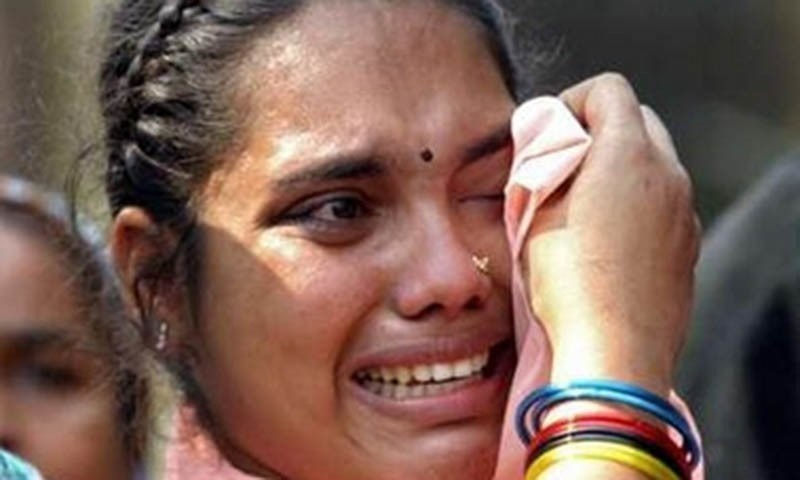
It is the aggrieved who are being denied timely justice and subjected to continued mental, physical and financial stress. The real suffering is the time wasted of the aggrieved party who are being denied of their fundamental right of speedy trial guaranteed under Article 21 of the Indian constitution. I have known of instances, where rain has become a reason for a strike in the Greater Noida District Court; a mere traffic jam, natural death of a judge’s family member and many irrelevant grounds become a reason for a holiday. Dates are rescheduled to next year on the basis of enormous work load. I have no doubt that there will be work load due to the size of the population and under-staffing of the courts, but being dishonourable opportunists doesn’t improve the situation. The grave concern here is that there is shortage of honourable lawyers already and adding to the already faulty system wouldn’t improve it substantially! Many lawyers aren’t in this for delivering justice but for the under-the-table advantages and on-the-face power. Please note, I am not talking about all lawyers, but many lawyers.
As citizens, we run away from the thought of being involved in the “court kacheri” because a case that ideally should end within a short span of time is dragged by the courts and police for a lifetime. Witnesses don’t want to be involved, aggrieved parties lose hope, precious time is wasted but only agony and misery continues to intensify. I, myself, have been called to give my statement for a personal case, just twice a year and both times there was a sudden strike in the middle of the day and the date was scheduled to next year. A complete waste of time, effort, leaves, the belief in the concept of justice and a without a doubt, a complete denial of my fundamental right.
According to National Judicial Data Grid and Business Today, the backlog of pending cases was touching 3.3 crore cases in 2018. While 2.84 crore cases were pending in the subordinate courts, the backlog clogging the High Courts and Supreme Court (SC) is 43 lakh and 57,987 cases, respectively. According to National Judicial Data Grid (NJDG), the five states which account for the highest pendency are Uttar Pradesh (61.58 lakh), Maharashtra (33.22 lakh), West Bengal (17.59 lakh), Bihar (16.58 lakh) and Gujarat (16.45 lakh).
The Law Commission revealed shocking data while recommending comprehensive amendments to The Advocates Acts, 1961 (Regulation of Legal Profession), the data showed that several district courts in India had more days of protest than working days between 2011 to 2016 and due to lawyers’ strikes. Between 2011 and 2016, 18 courts in Uttar Pradesh, Tamil Nadu, Uttarakhand and Rajasthan were on strike for an average of around 110 days per year, with several at more than 135 days a year, and one - Muzzafarnagar - at an average of 158 days.
Moreover, whenever a lawyers’ strike is called usually somewhere between a few thousands to tens of thousands of lawyers may join in, even if it sometimes means that a faction of lawyers who are striking against another faction join the second faction days later in a wider strike. On the day of a strike call the assumption is that all practicing lawyers have joined the strike and many cases are adjourned to a future date without the lawyers knowledge.
The BCI is responsible to lay standards of professional conduct and etiquettes of advocates. According to some verdicts of courts, the BCI should ensure that lawyers should not be involved in strikes and protest. However, the BCI at many instances has called for a strike itself, like the incident mentioned above. In the case of Ex-Capt. Harish Uppal v Union of India and Hussain v Union of India, the Supreme Court made it clear that “lawyers have no right to strike. No Bar Council or Bar Association can permit calling of a meeting for purposes of considering a call for strike or boycott and requisition. Only in the rarest of rare cases where the dignity, integrity, and independence of the Bar and/or the Bench are at issue, courts may ignore to a protest abstention from work for not more than one day” and the court had clearly stated that the lawyers strike and suspension of the court is illegal and it is high time that legal fraternity realizes its duty to the society which is foremost.
In Krishnakant Tamrakar v State of Madhya Pradesh[7], the Supreme Court held that frequent strikes by lawyers are illegal as they obstruct access to justice. The further court also observed that such actions amount to contempt of court and office. In Common Cause a Registered Society v. Union of India and Others[8] in this case it was held that, if any associations of advocates call for a strike, then the State Bar Council or the Bar Council of India must take actions against those persons who call for strike In another case of Praveen Pandey v. State of Madhya Pradesh and others[9] wherein the court held “the decision of the State Bar Council calling upon the Advocates in the State to observe a week-long protest and to abstain from all judicial works and Court proceedings is illegal, unconstitutional and against the statutory provisions as well as contrary to the judgments of the Supreme Court”
There are recommendations in place by the Law Commission for addressing the grievances of advocates in Advocates Amendment Bill 2017 and 2019 as an attempt to lay down agreeable redressal processes for lawyers and to avoid multiple obstructions that affect the administration of justice by holding numerous strikes and protests. There is a reason why there has been several discussions why strikes and such protests are unconstitutional and illegal by the Judiciary. Advocates are officers of the courts who are responsible for serving justice to people. As mentioned before, the frequency of these strikes contributes to the pendency to the cases and adds misery to the aggrieved and disrupts the functioning of the court. Despite various judgements passed by the apex court, lawyers have continued to go on strikes, disregarding legal values, breaching the trust of the court by defying the verdicts of Supreme Court.
Conclusion There is a larger responsibility one takes on when they choose to become lawyers and judges. The profession is only noble when that responsibility is recognized and worked for. The responsibility of the protection of the rights of the people. When the same officers of the law become hindrances to the end goal repeatedly, then it is safe to say, the physical justice system is corrupt.
References
https://www.india.gov.in/sites/upload_files/npi/files/coi_part_full.pdf https://www.indiatoday.in/india/story/tis-hazari-clash-punjab-haryana-lawyers-strike-monday-1615369-2019-11-03 https://www.hindustantimes.com/india-news/commuters-journos-cop-attacked-as-delhi-lawyers-strike-turns-violent/story-VccfAB07CeucjmDvsuqbxI.html http://lawcommissionofindia.nic.in/ http://lawcommissionofindia.nic.in/reports/Report266.pdf Lawlive Ex-Capt. Harish Uppal v Union of India and Another, (2003) 2 SCC 45 Hussain v Union of India

Comments